
THE HOMELESS CRISIS
Homelessness is a complex crisis that was decades in the making, the result of soaring rents and stagnant incomes, racism, the economic impact of the COVID-19 pandemic, and many other causes.
The reasons individuals become unhoused are complicated and often multifaceted. Those that become unhoused are frequently rent-burdened, live paycheckto-paycheck, and many report suffering from serious mental illness or substance abuse issues. One-time events such as job loss, medical incidents, significant unforeseen costs, and no-fault evictions, also often lead individuals to become unhoused.
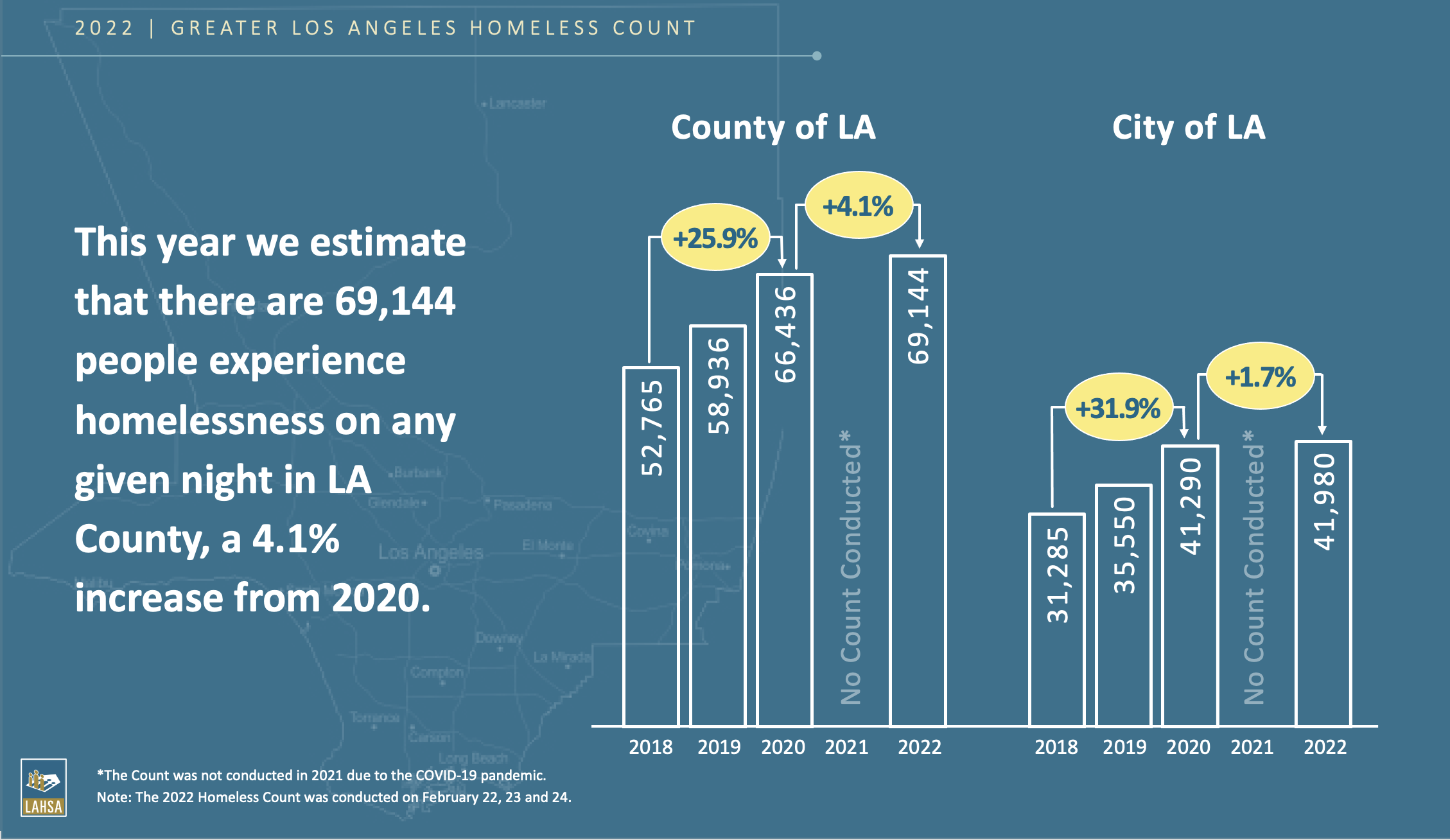
Despite substantial gains in housing and services, the 2022 Greater Los Angeles Homeless Count by the Los Angeles Homeless Services Authority (LAHSA) found 69,144 people experiencing homeless countywide, a 4.1% increase from 2020 (no Count was conducted in 2021, due to the pandemic). About 70% (48,548) of County’s homeless population is unsheltered.
LAHSA noted the 4.1% increase between 2020 and 2022 was significantly less than the 25.9% increase between 2018 and 2020, and suggested this “flattening of the curve” may be due to emergency measures that helped keep people in their homes during the pandemic.
One of the primary drivers of homelessness is the severe lack of affordable housing.
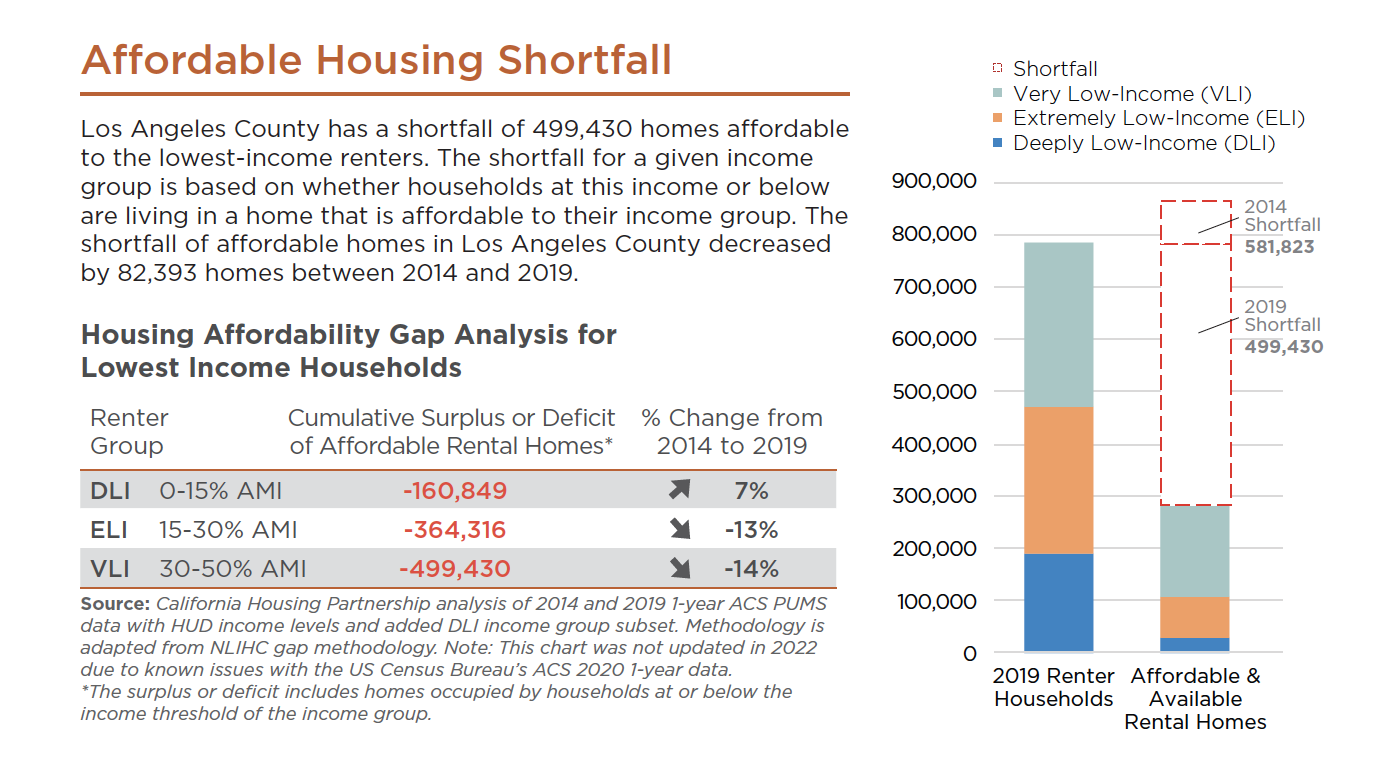
According to the 2022 LA County Annual Affordable Housing Outcomes Report by the nonprofit California Housing Partnership, the County has a shortfall of 499,430 affordable homes.
Even though the shortage of affordable homes remains large, this shortfall is 82,393 less than in 2014.
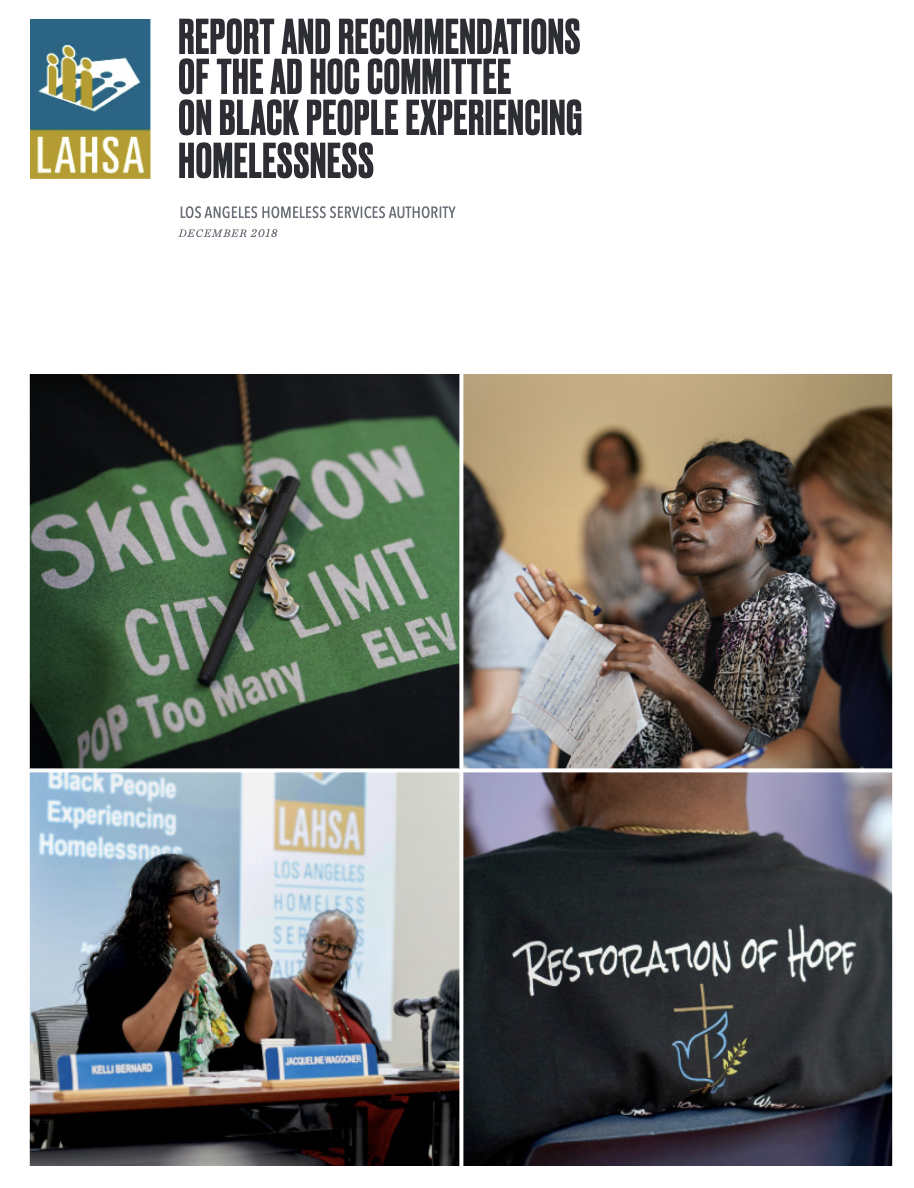
Black people are overrepresented in the homeless population nationwide. The groundbreaking 2018 report by LAHSA’s Ad Hoc Committee on Black People Experiencing Homelessness noted that while Black people represented only 9% of the County’s general population in 2017, they comprised 40% of the homeless population.
According to the report, “The impact of institutional and structural racism in education, criminal justice, housing, employment, health care, and access to opportunities cannot be denied: homelessness is a by-product of racism in America.”
The County’s Anti-Racism, Diversity, and Inclusion (ARDI) Initiative is currently developing an action plan to implement the 67 recommendations developed by the Ad-Hoc Committee on Black People Experiencing Homelessness, along with a Racial Equity Action Plan.
Functional Zero is that point when a community’s homeless services system is able to prevent homelessness whenever possible and ensure that when homelessness does occur, it is rare, brief and one-time. If Los Angeles County is to achieve and sustain Functional Zero, its homeless services system must be able to provide permanent housing to everyone depending on it to secure such housing.
Click on the interactive tool below to gauge the impact of the below variables on the timeline to Functional Zero.
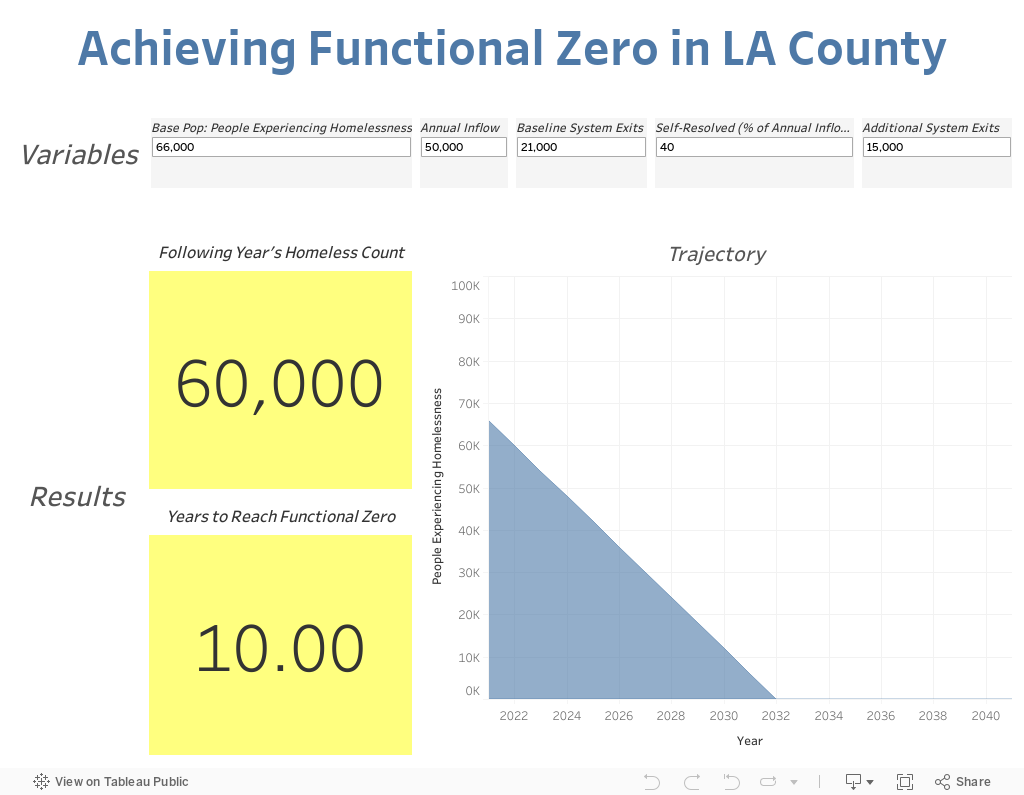
Base Population – Los Angeles County’s annual Point-in-Time Homeless Count
Annual Inflow – the number of people who become newly homeless in a given year
Baseline System Exits – the number of people that the homeless services system currently has the capacity to place in permanent housing; in 2021, the system has the capacity to permanently house 21,000 people
Self-Resolved – the number of people experiencing homelessness who are able to obtain permanent housing on their own, without assistance from the system; this typically equates to about 40 percent of the Annual Inflow
Additional System Exits – the number of additional permanent housing placements that are possible beyond the Baseline System Exits in a given year. Along with reduced inflow, these additional system exits help drive reductions in the Homeless Count
To reduce inflow into homelessness, public policy changes are needed to increase the supply of affordable housing, mitigate rent increases, and prevent unjust evictions. To increase exits into permanent housing, further investments are necessary to increase the availability of rental subsidies and supportive services, and to enable people experiencing homelessness to increase their income.