
Retain Housing, Build Futures
Tip Sheet for ICMS Case Managers
Access essential strategies and action steps to support long-term housing stability.
Understanding Housing Retention Assistance

Support for Lasting Stability
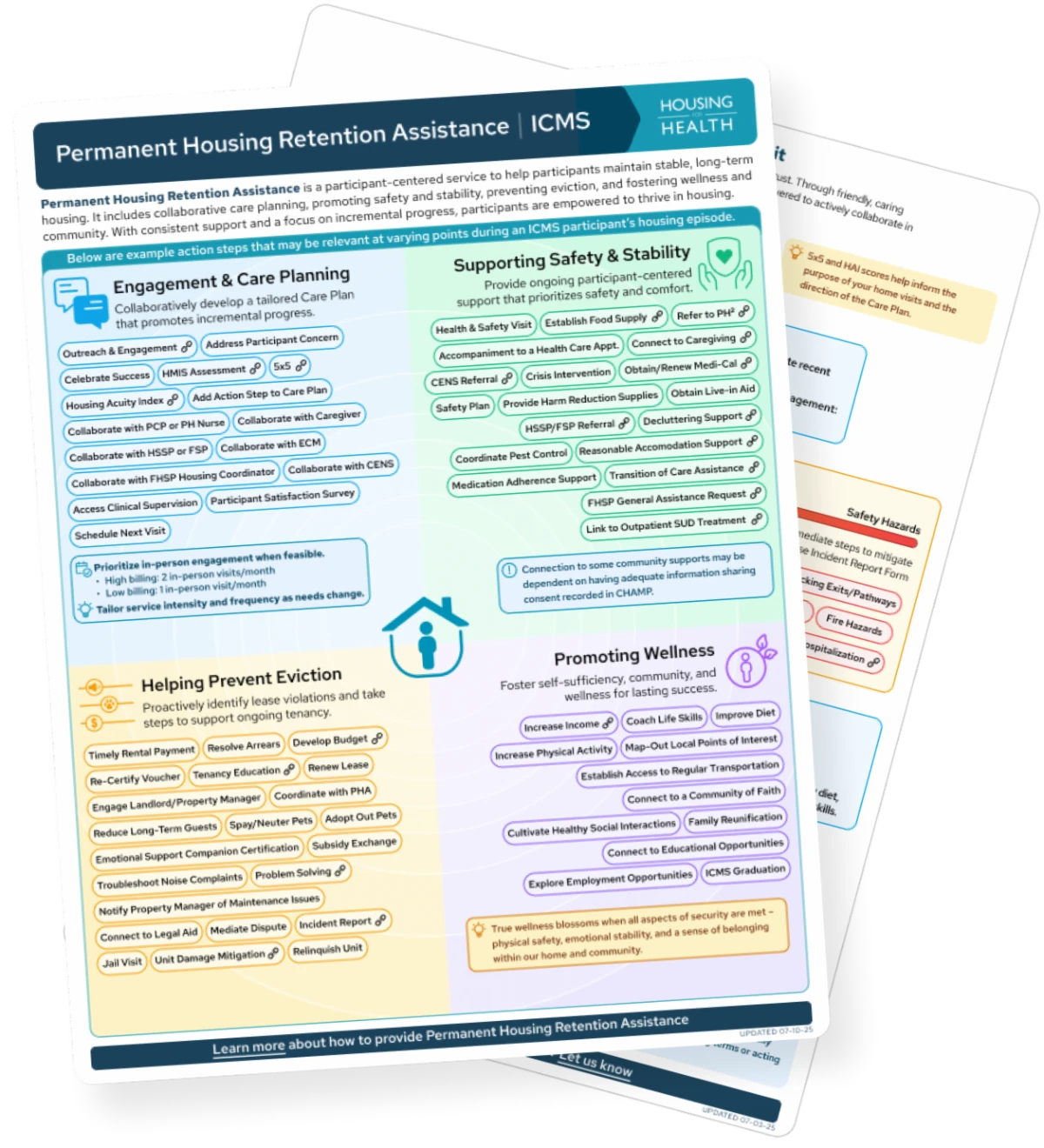
Permanent Housing Retention Assistance helps individuals and families stay housed for the long term. It’s a proactive approach that combines regular check-ins, eviction prevention, and resource connections to overcome barriers. Case managers, participants, landlords, and community partners collaborate to ensure housing becomes a foundation for stability and growth.
Core Strategies for Housing Retention
Four Pillars of Success
Engagement & Care Planning
Collaboratively develop a tailored Care Plan that promotes incremental progress.
- Outreach & Engagement
- Address Participant Concern
- Celebrate Success
- HMIS Assessment
- 5×5
- Housing Acuity Index
- Add Action Step to Care Plan
- Collaborate with PCP
- Collaborate with Caregiver
- Collaborate with HSSP or FSP
- Collaborate with ECM
- Collaborate with FHSP Housing Coordinator
- Collaborate with CENS
- Access Clinical Supervision
- Participant Satisfaction Survey
- Schedule Next Visit
Prioritize in-person engagement when feasible.
- High billing: 2 in-person visits/month
- Low billing: 1 in-person visit/month
Supporting Safety & Stability
Provide ongoing participant-centered support that prioritizes safety and comfort.
- Health & Safety Visit
- Establish Food Supply
- Obtain/Renew Medi-Cal
- Accompaniment to a Health Care Appt.
- Connect to Caregiving
- Refer to PH2
- Submit HSSP/FSP Referral
- Provide Harm Reduction Supplies
- Decluttering Support
- Medication Adherence Support
- Coordinate Pest Control
- Safety Plan
- Reasonable Accommodation Support
- FHSP General Assistance Request
- Obtain Live-in Aid
- Submit CENS Referral
- Transition of Care Assistance
- Outpatient SUD Treatment
- Crisis Intervention
Helping Prevent Eviction
Proactively identify lease violations and take steps to support ongoing tenancy.
- Timely Rental Payment
- Resolve Arrears
- Develop Budget
- Re-Certify Voucher
- Tenancy Education
- Renew Lease
- Engage Landlord/Property Manager
- Coordinate with PHA
- Reduce Long-Term Guests
- Spay/Neuter Pets
- Adopt Out Pets
- Emotional Support Companion Certification
- Subsidy Exchange
- Troubleshoot Noise Complaints
- Notify Property Manager of Maintenance Issues
- Connect to Legal Aid
- Mediate Dispute
- Problem Solving
- Incident Report
- Jail Visit
- Unit Damage Mitigation
- Relinquish Unit
Promoting Wellness
Foster self-sufficiency, community, and wellness for lasting success.
- Increase Income
- Coach Life Skills
- Improve Diet
- Increase Physical Activity
- Map-Out Local Points of Interest
- Establish Access to Regular Transportation
- Connect to a Community of Faith
- Cultivate Healthy Social Interactions
- Family Reunification
- Connect to Educational Opportunities
- Explore Employment Opportunities
- ICMS Graduation
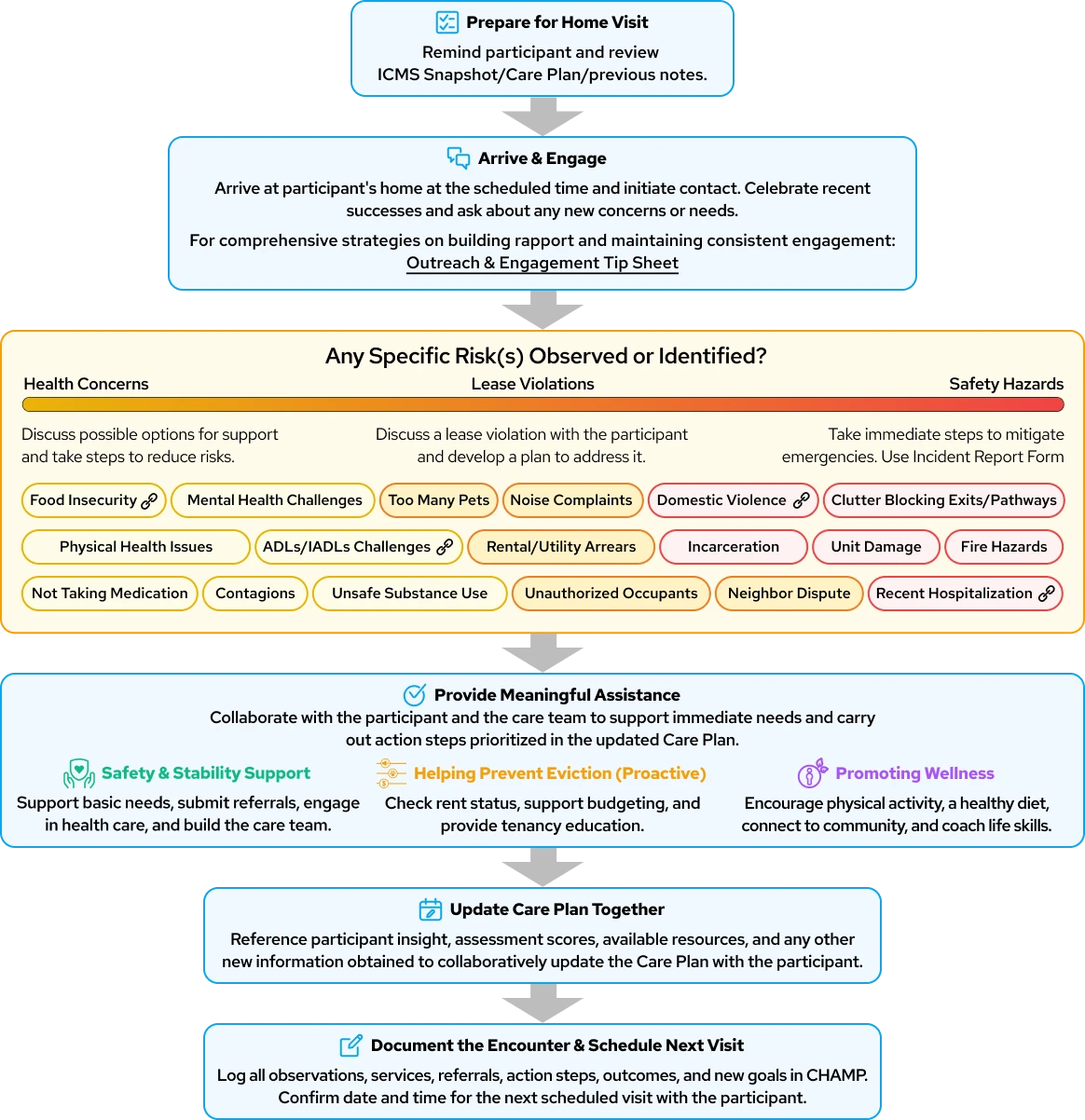
Routine Health & Safety Visit
This routine check-in is your opportunity to establish consistency and build trust. Through friendly, caring conversations, you’ll foster deeper engagement, helping participants feel empowered to actively collaborate in shaping their wellness and future for lasting stability.
Your Wellbeing Matters Too
ICMS is challenging work. To prevent burnout and ensure long-term impact, focus on building out the care team to share the load, access clinical supervision, and prioritize self-care.
Empowerment Over Enforcement
The case manager’s role is to support participants with successfully maintaining their own household, rather than dictating terms or acting as an enforcer.