Decluttering Information Center
Decluttering focuses on improving safety and comfort in living spaces without judgment. It is a compassionate, participant-centered approach designed to support individuals in managing clutter — not just removing it.
Use the tabs below to understand the harm reduction approach, assess clutter levels, identify risks, and find action steps for ICMS case managers.
What Is Decluttering?
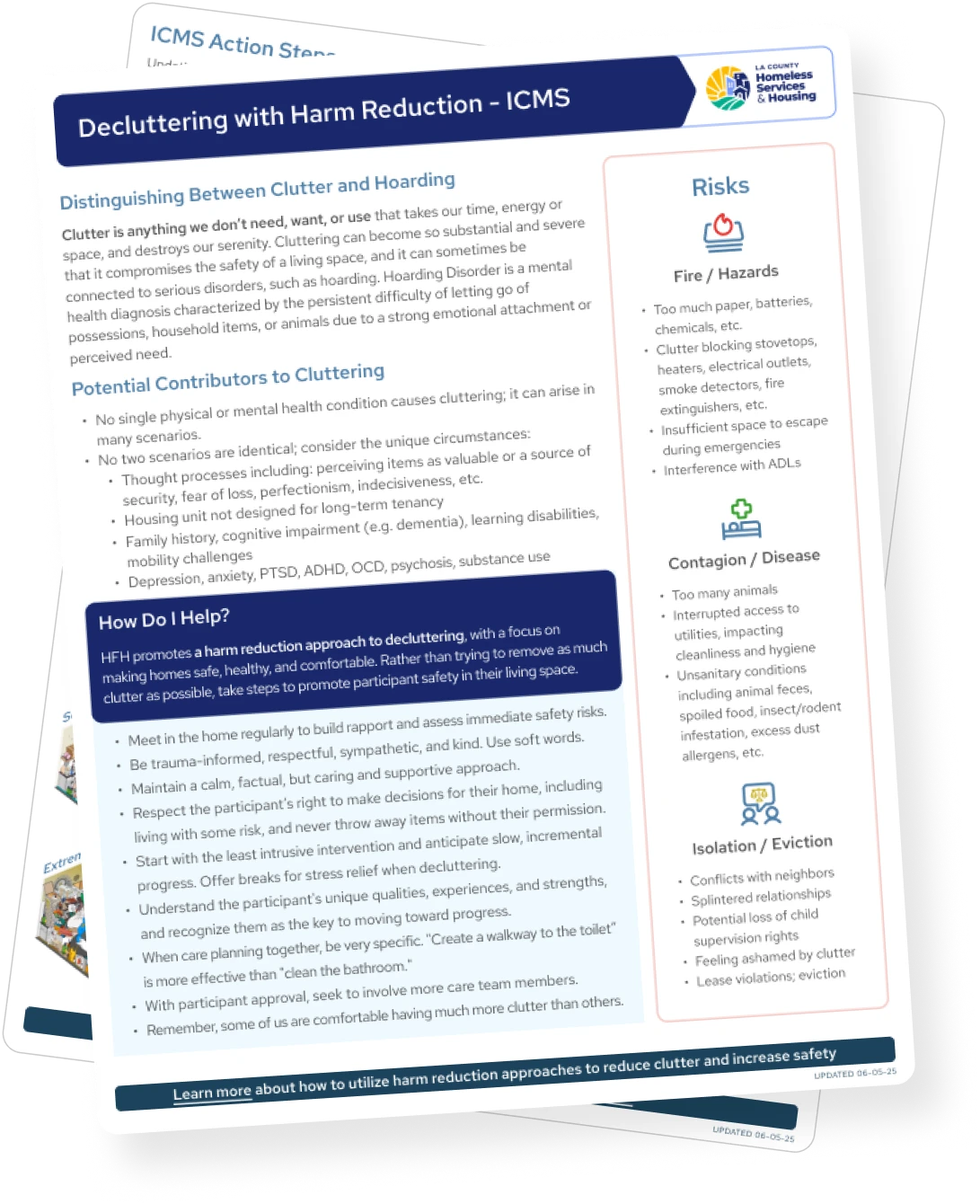
Decluttering focuses on improving safety and comfort in living spaces without judgment. Rather than trying to remove as much clutter as possible, the goal is to promote participant safety in their living space through slow, incremental progress built on trust and collaboration.
Clutter vs. Hoarding
Clutter is anything we do not need, want, or use that takes our time, energy, or space. Cluttering can become so substantial and severe that it compromises the safety of a living space.
Hoarding Disorder is a mental health diagnosis characterized by the persistent difficulty of letting go of possessions, household items, or animals due to a strong emotional attachment or perceived need. Clutter can be connected to hoarding but the two are not always the same.
Potentially Contributing Factors
No single physical or mental health condition causes cluttering. Contributing factors may include:
- Thought processes including perceiving items as valuable or a source of security, fear of loss, perfectionism, and indecisiveness
- Unit not meant for long-term tenancy
- Family history, cognitive impairment such as dementia, learning disabilities, and mobility challenges
- Depression, anxiety, PTSD, ADHD, OCD, psychosis, and substance use
Decluttering with Care: A Harm Reduction Approach
HFH promotes a harm reduction approach to decluttering. The goal is to make homes safe, healthy, and comfortable through participant-centered collaboration. Remember that some people are comfortable having more clutter than others — the focus is always on safety, not judgment.
Note: Never throw away items without participant permission. Respect the participant’s right to make decisions for their home, including living with some risk.
How to Approach Decluttering
- Meet in the home regularly to build rapport and assess immediate safety risks
- Be trauma-informed, respectful, sympathetic, and kind — use soft words
- Maintain a calm, factual, but caring and supportive approach
- Respect the participant’s right to make decisions for their home, including living with some risk
- Start with the least intrusive intervention and anticipate slow, incremental progress — offer breaks for stress relief when decluttering
- Understand the participant’s unique qualities, experiences, and strengths, and recognize them as the key to moving toward progress
- When care planning, be very specific — “Create a walkway to the toilet” is more effective than “clean the bathroom”
- With participant approval, seek to involve more care team members
Participant Considerations
- No two scenarios are identical — consider the unique circumstances of each participant
- No single physical or mental health condition causes cluttering — it can arise in many scenarios
- Thought processes including perceiving items as valuable or a source of security may drive behavior
- Perfectionism, fear of loss, indecisiveness, anxiety, PTSD, ADHD, OCD, and substance use may all contribute
- Family history, cognitive impairment, learning disabilities, and mobility challenges are additional factors
Risks Associated with Clutter
Clutter can create significant risks for participants in three categories. Use these risk categories to guide your assessment during home visits and to prioritize action steps in the Care Plan.
Important: Take immediate action for emergencies including fire, medical, and structural hazards by calling 911 and ensuring participant safety.
Fire and Hazards
- Too much paper, batteries, chemicals, etc.
- Clutter blocking stovetops, heaters, and electrical outlets
- Insufficient space to escape during emergencies
- Interference with ADLs
Contagion and Disease
- Too many animals
- Interrupted access to utilities, impacting cleanliness and hygiene
- Unsanitary conditions including animal feces, spoiled food, insect and rodent infestation, and excess dust allergens
Isolation and Eviction
- Conflicts with neighbors
- Splintered relationships
- Potential loss of child supervision rights
- Feeling ashamed by clutter
- Lease violations and eviction
ICMS Action Steps
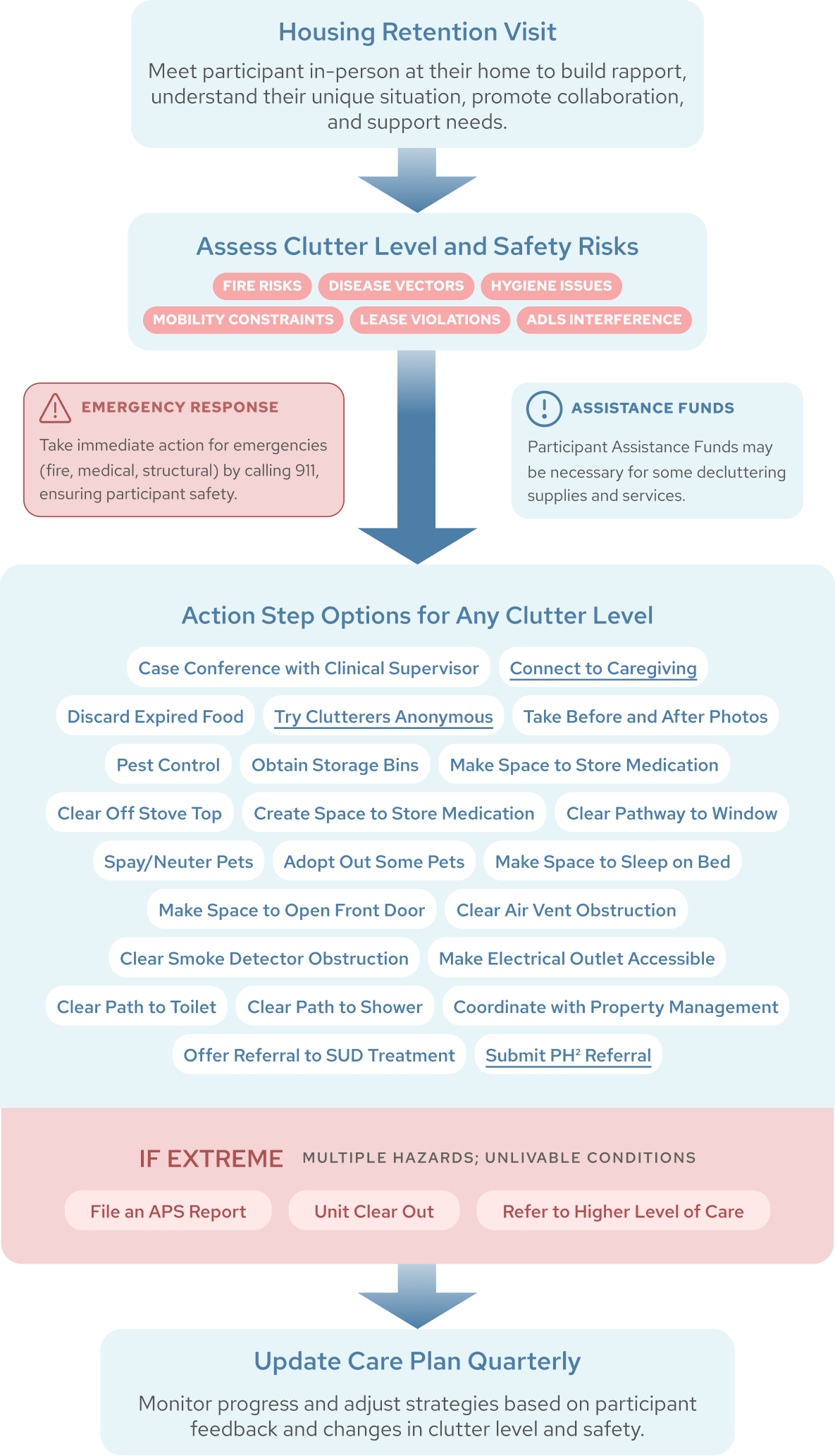
Use this workflow during each housing retention visit to assess clutter level, identify risks, and select appropriate action steps. Update the Care Plan quarterly based on participant feedback and changes in clutter level and safety.
Note: Participant Assistance Funds may be necessary for some decluttering supplies and services.
Step 1: Housing Retention Visit
Meet the participant in person at their home to build rapport, understand their unique situation, promote collaboration, and support their needs.
Step 2: Assess Clutter Level and Safety Risks
Assess for fire risks, disease vectors, hygiene issues, mobility constraints, lease violations, and ADL interference. Take immediate emergency action if needed. Consider whether Participant Assistance Funds are needed.
Step 3: Update Care Plan Quarterly
Monitor progress and adjust strategies based on participant feedback and changes in clutter level and safety.
Action Step Options for Any Clutter Level
The following actions can be used at any clutter level based on assessed need and participant consent:
- Case conference with clinical supervisor
- Connect to caregiving
- Discard expired food
- Try Clutterers Anonymous
- Take before and after photos
- Pest control
- Obtain storage bins
- Make space to store medication
- Clear off stove top
- Clear pathway to window
- Spay or neuter pets
- Adopt out some pets
- Make space to sleep on bed
- Make space to open front door
- Clear air vent obstruction
- Clear smoke detector obstruction
- Make electrical outlet accessible
- Clear path to toilet and shower
- Coordinate with property management
- Offer referral to SUD treatment
- Submit PH² referral
If extreme — multiple hazards and unlivable conditions: File an APS Report, Unit Clear Out, Refer to Higher Level of Care.
ICMS Action Steps Flow Diagram
Clutter Scale
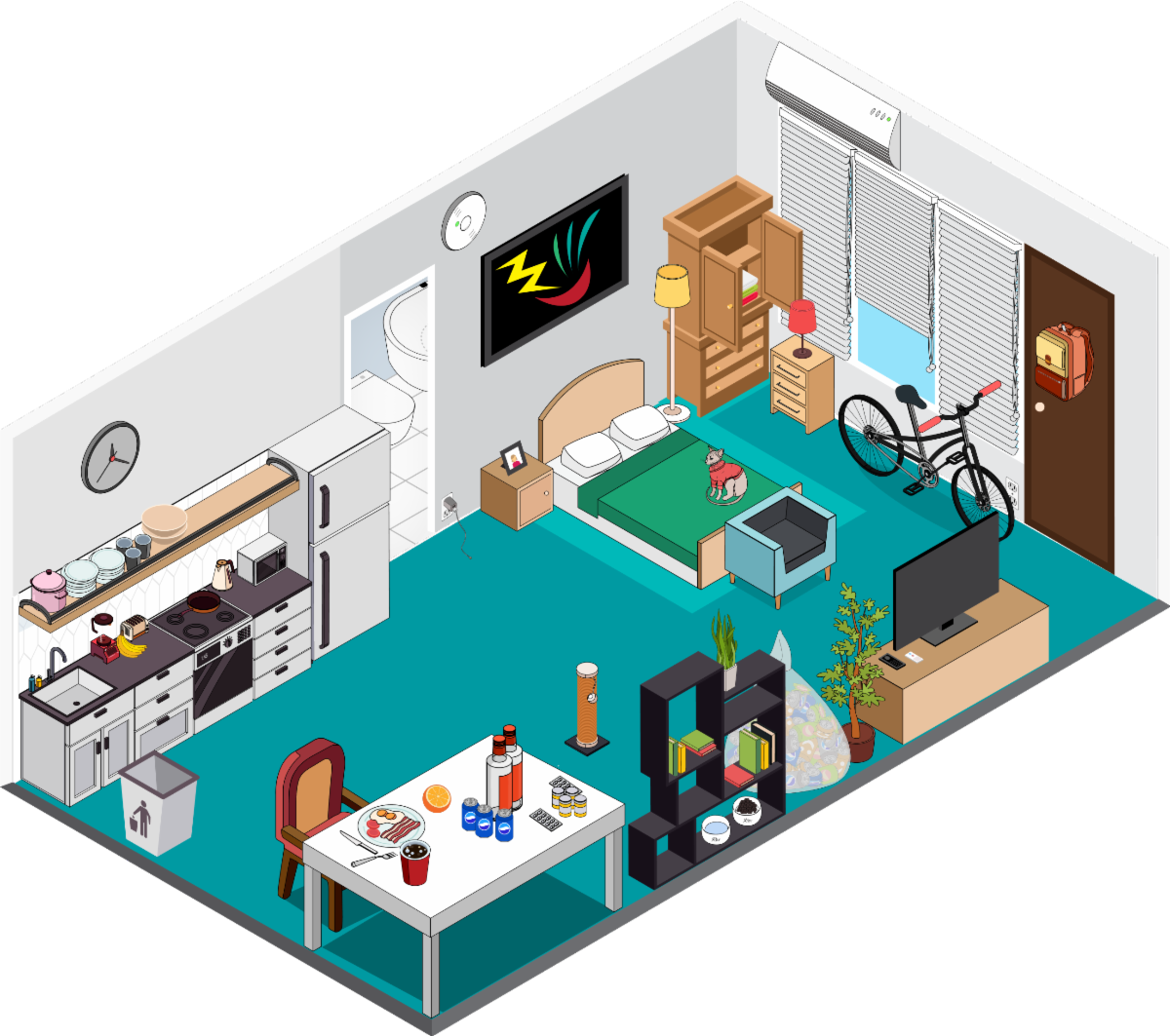
Use the illustrated clutter scale to assess the current condition of a participant’s home and communicate findings clearly with the care team. Each level includes a description and a corresponding image to support consistent assessment across providers.
Note: Download the full Illustrated Clutter Scale for a printable reference to use during home visits.
Minimal Clutter
A well-maintained and organized home. Living spaces are tidy, easily accessible, and free from obstructions. Exits are clear, and there are no plumbing or electrical issues. The home appears clean and orderly, with proper ventilation and an appropriate number of pets. No signs of excessive belongings or disarray.
Mild Clutter
A generally clean and safe home with some visible mess. Small piles of clutter may be present, but living spaces remain functional and accessible. Exits are clear and all appliances are in working order. No plumbing or electrical issues. The home has sufficient ventilation, no signs of mold, and an appropriate number of pets. No noticeable odors or excessive waste buildup.

Moderate Clutter
Some areas of the home are becoming difficult to navigate due to clutter. At least one major appliance is out of order. One exit (door or window) is blocked. There may be pet feces inside, overflowing garbage, and mold growth. The ventilation system may not be functioning properly. Essential rooms such as the kitchen, bedroom, or living room may be partially or entirely unusable due to clutter and disrepair.

Severe Clutter
Living spaces are largely inaccessible due to excessive clutter. Mildew is present on walls and other surfaces. Piles of belongings block paths, leaving only narrow trails for movement between rooms. Household functions are significantly impaired. Exits may be obstructed, making it difficult to leave in case of emergency. The environment is unsanitary and potentially hazardous to health.

Extreme Clutter
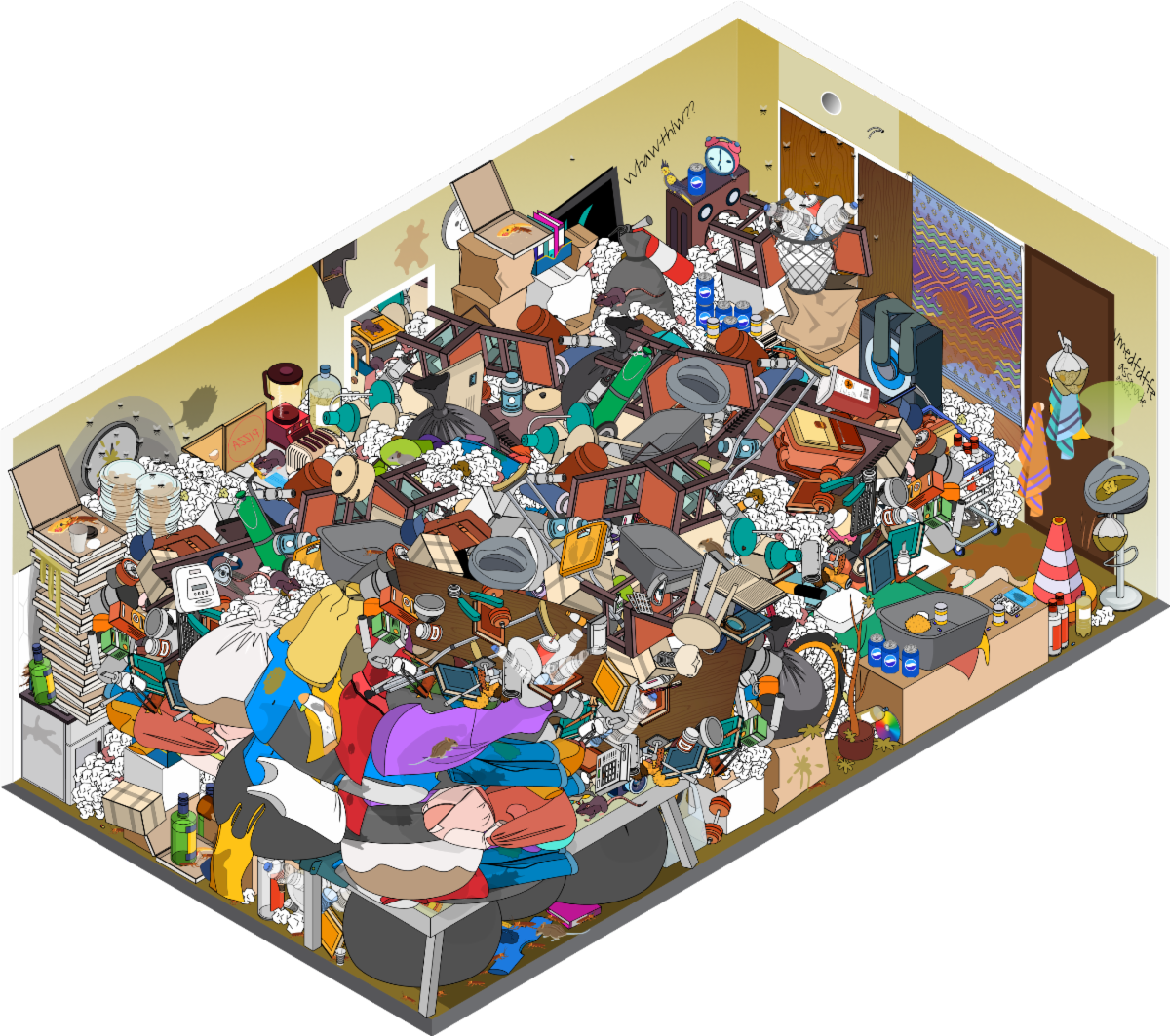
The home is unlivable and poses severe health and safety risks. Mold and mildew are widespread. Multiple fire hazards exist due to excessive clutter and blocked exits. Animal waste and human feces may be present due to plumbing failures. Infestations of rodents, bed bugs, or other pests are likely. Structural damage is apparent and running water may be unavailable. Climbing or crawling may be necessary to move through the space. Most, if not all, appliances are nonfunctional, and emergency exits are severely obstructed.
If extreme conditions are present: File an APS Report, initiate Unit Clear Out, and Refer to Higher Level of Care.