
On a blustery February day in the Antelope Valley, 35 people living unsheltered on an expansive desert plain moved into safe interim housing through the Los Angeles County Pathway Home program. Now safely indoors, they will have access to supportive services and other resources to support their transition out of homelessness and into permanent housing.
People entering the program on this day said they had grown weary of living in encampments and often dilapidated RVs, coping with cold one part of the year and extreme heat in another.
Alma left behind the dirt and mud of the desertscape and a succession of RVs that had been her home for more than a year and a half in the Lancaster encampment. Overhead, the sky was a strange expanse of sunshine and dark gray clouds.
“It’s been rough—especially as a woman,” Alma, 35, said of her time being unhoused in the desert. “They assume people out here are prostitutes. That’s not at all my situation… You ask for help with water, and they assume you owe them something. I’m very excited to get out of this life.”
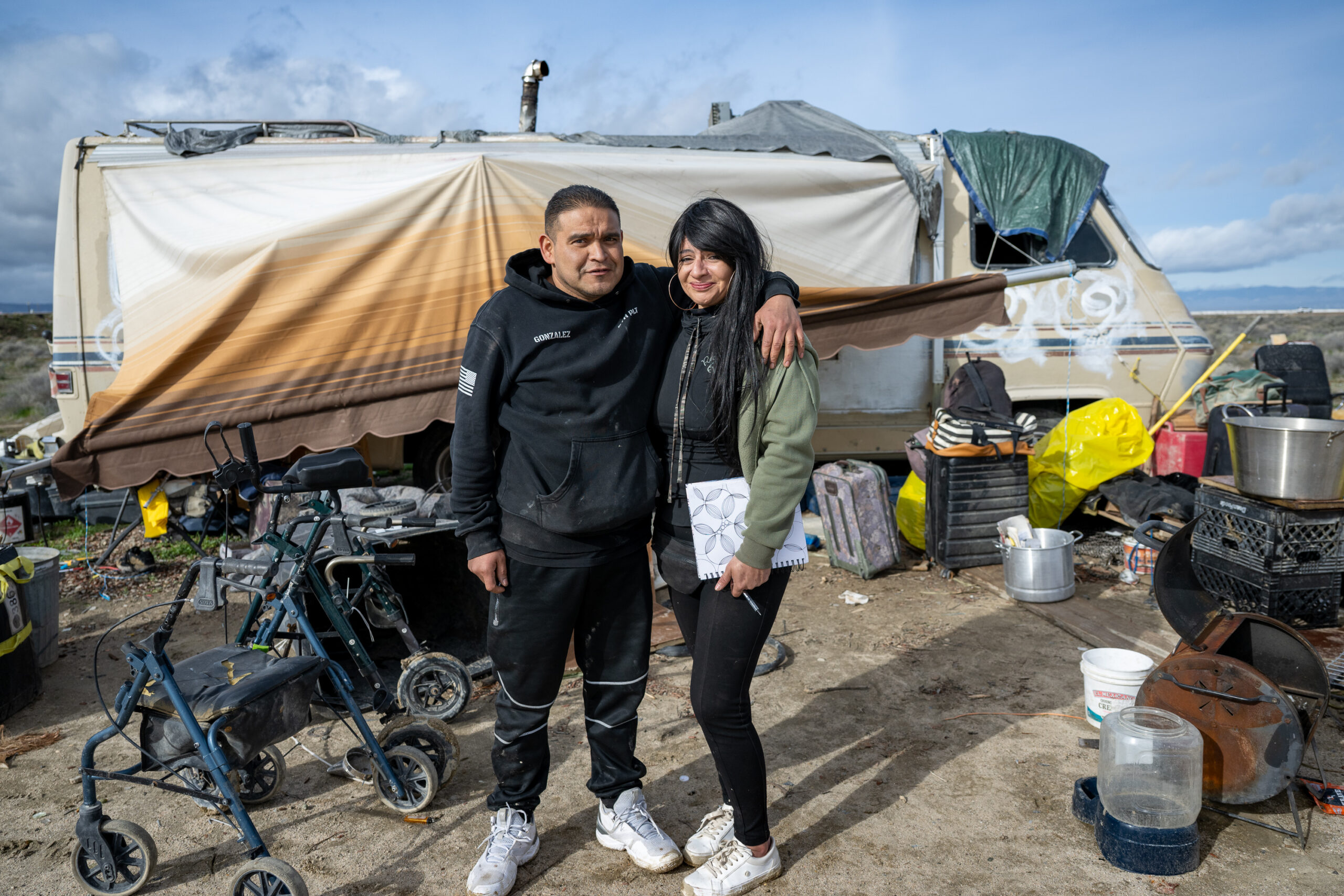
She was moving with her boyfriend and their Rottweiler, Chato. Her boyfriend’s father would also be getting a room. “He’s been the tough one to crack,” she said of the father who had been living unsheltered in the desert for at least 15 years.
Alma, on the other hand, was ready for change. “Worrying about survival every day—it doesn’t work,” she said. “We tried it. It didn’t.”
Now she wondered, “What am I going to do with the extra time?” Living unsheltered meant heating water on a gas stove that they had. She marveled at leaving that chore behind: “To have hot water instantly!”
Alma had worked in a business as an assistant. Now that she’s safely indoors, she’ll be able to work with Hope the Mission and Volunteers of America, the organizations providing onsite case management at her interim housing site, to find a similar job.
On this day, she was just grateful for her outreach worker, Jason Oster, a LAHSA supervisor. “He’s moved mountains for us,” she said as she clutched a notebook with her doodles and sketches.

Robert was also waiting for a ride to his new interim housing. He had been homeless for 10 years, he said. Eight of those were spent in the desert, the last few years in an RV. At 66, he is hobbled by some injuries and walks with a cane. For years, he did stagehand work for rock and roll groups, some of which would go on to be famous. “Unfortunately, there was no retirement plan,” he said.
He also did painting, construction, and yard work. But homelessness crept up on him. “Jobs run out and the next thing you know, there you are.”
When he gets his new room, he said, “I’m going to take a three-hour shower.”
After that, “I’m going to walk better again,” he vowed. “Then, I’ll start thinking about things.”
Also preparing to leave was a much younger man named Robert, who had come to the desert nearly five years ago. “I was staying at my parents’ house, but we argue a lot,” he said. “My dad comes out to check on me, help me out, bring food.” At one point, Robert was a car mechanic. But he can’t do that work anymore. He accidentally cut off two of his fingers with a chain saw two years ago. When he got the offer of interim housing, he said he thought, “At least I want to give it a shot.” His dog, Oso (“Bear” in Spanish), was with him. “He was by my side when I got hurt,” Robert said. “He’s like my shadow.”
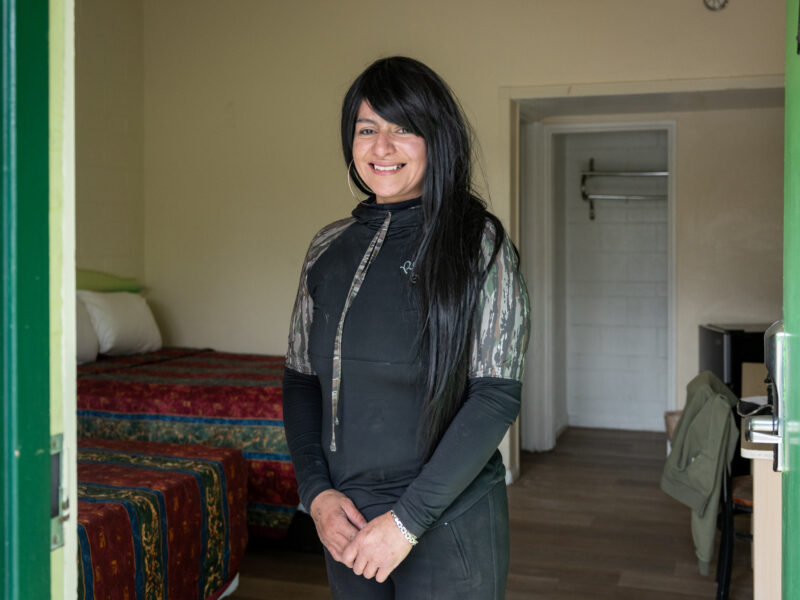
Once in her room, Alma said she felt “scared, but excited. Everybody is really nice. I’m really looking forward to all the help they say they can provide for us.” First on her agenda: “Shower, then wash some clothes—and be happy not to be in the dirt anymore.”
This Pathway Home operation involved an extensive partnership of the LA County Department of Homeless Services and Housing; the Los Angeles Homeless Services Authority (LAHSA), the City of Lancaster; LA County Supervisor Kathryn Barger whose fifth supervisorial district includes Lancaster; service providers LA Family Housing, Hope the Mission, Volunteers of America, and Mental Health America of Los Angeles (MHALA); LA County departments of Public Health, Public Works, Mental Health, Chief Executive Office Real Estate Division, Animal Care and Control, and Fire; the County Chief Executive Office; and the LA Sheriff’s Department Homeless Outreach Services Team (HOST).
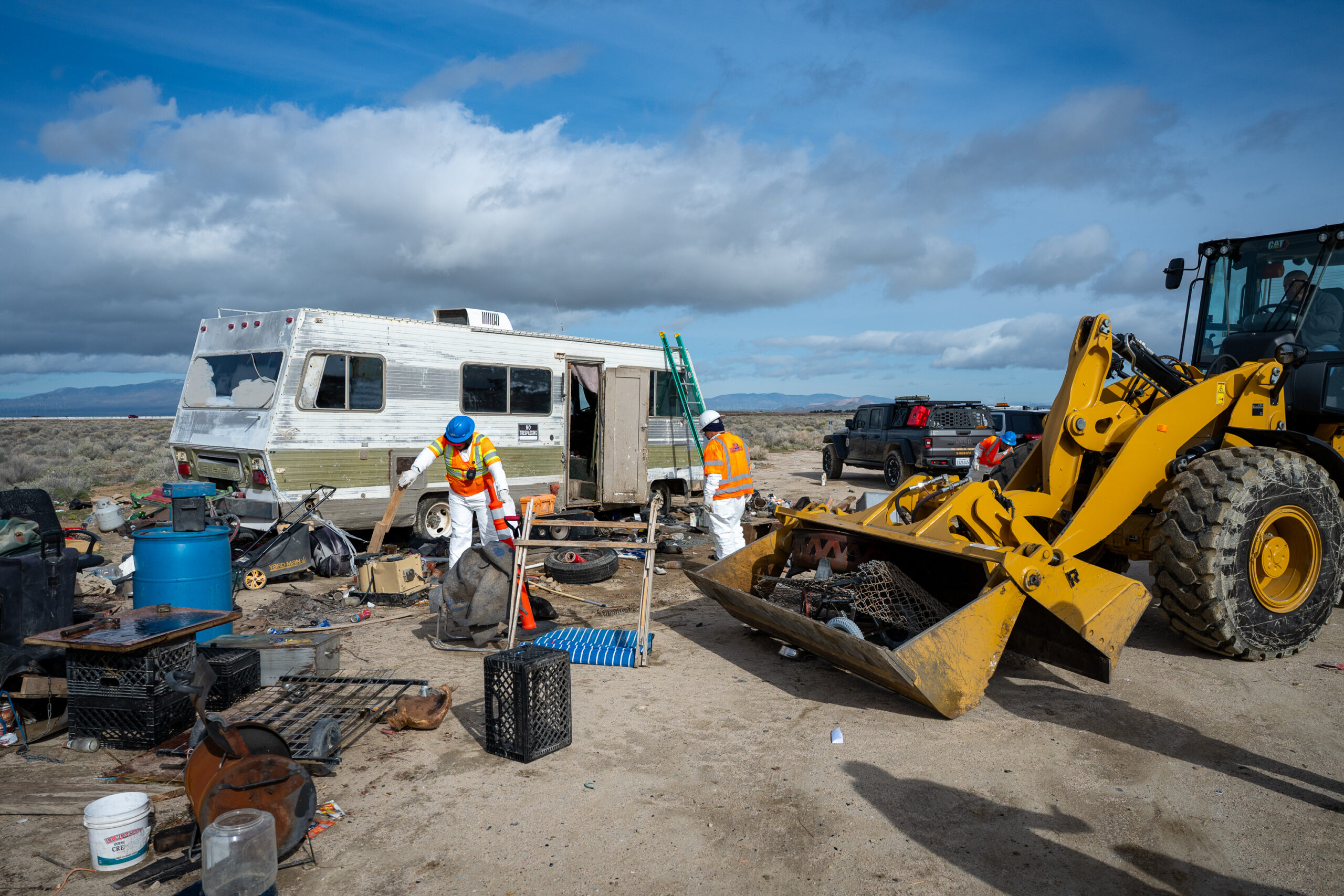
During the operation, the County removed 16 RVs and 3 vehicles from the property. Prior to the operation, seven RVs had already been removed, bringing the total of RVs cleared from the area to 23.
—
The Lancaster operation was the 72nd Pathway Home encampment resolution since the program launched in August 2023. More than 2,200 Los Angeles County residents have come off the streets through Pathway Home, over 600 of whom are now permanently housed.
